

Sustainability is no longer a marketing slogan for Singapore SMEs. Large corporate customers now push ESG questionnaires down their supply chains, banks are beginning to price green financing more favourably, and regulators are steadily raising the compliance bar on energy use and emissions reporting. For a small or mid-sized business owner, the practical question is rarely “should we become more sustainable” but “how do we pay for it without derailing cash flow.” That is exactly the gap the Enterprise Sustainability Programme (ESP) was built to close.
This guide walks through what the ESP actually funds, who qualifies, how the support rate has changed in 2026, and how it fits alongside the other grants a Singapore company is likely to be juggling at the same time.
What the Enterprise Sustainability Programme Is
Launched on 4 October 2021 by Enterprise Singapore, the ESP was set up with up to S$180 million in funding, with a stated goal of benefiting at least 6,000 enterprises over four years. Rather than being a single grant with one application form, the ESP is better understood as an umbrella programme that channels support through three levels.
The first level develops enterprise-wide sustainability capabilities through subsidised training workshops and enhanced Enterprise Development Grant (EDG) support for sustainability-linked consultancy projects. The second level strengthens sector-specific capabilities through partnerships with Trade Associations and Chambers, so that industry-specific sustainability standards (in manufacturing, logistics, or F&B, for example) can be adopted at scale rather than company by company. The third level builds a wider sustainability ecosystem through green financing schemes such as the EFS-Green loan, training and certification pathways, and the development of sustainability standards.
Who Is Eligible
The ESP is open to local enterprises regardless of the sector they operate in, as long as the business is registered and operating in Singapore and has at least 30% local shareholding. Unlike some sector-specific schemes, there is no requirement to already hold a sustainability certification or have started a decarbonisation project. The programme is explicitly designed to support companies at different stages of their sustainability journey, from a company that has never measured its carbon footprint to one that is already mid-way through an ISO 14001 certification process.
Because ESP support is typically channelled through the EDG framework rather than through a dedicated standalone application form, eligibility in practice tracks the same core EDG criteria: the applicant must be a business entity registered and operating in Singapore, with a minimum of 30% local equity held by Singaporeans or Singapore Permanent Residents, and the project must be at a stage where it has not yet commenced.
What the Grant Actually Covers
ESP-supported projects typically fall into a few recognisable categories: energy audits and carbon footprint assessments, consultancy to redesign processes for lower energy or material intensity, adoption of sustainability reporting frameworks and software, certification costs (such as ISO 14001 or Singapore’s Green Mark equivalents for relevant sectors), and training for staff to build in-house sustainability capability rather than permanently outsourcing it.
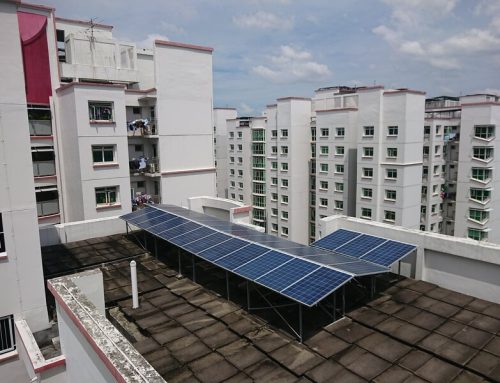
Where the required capital expenditure is larger, for example installing solar panels, upgrading to more energy-efficient equipment, or retrofitting a factory floor, businesses are generally better served combining ESP-supported consultancy with the EFS-Green loan scheme or the Energy Efficiency Grant (EEG), both of which are designed to work alongside ESP rather than duplicate it.
Support Rates: What Changed in 2026
The support rate under ESP is not fixed indefinitely, and businesses planning a sustainability project should pay close attention to the applicable window. Enterprise Singapore defrayed 70% of eligible costs for SME applications submitted between 1 November 2024 and 31 March 2026. For applications submitted from 1 April 2026 through to 31 October 2027, which is the window that applies as this guide is published, the support rate has stepped down to 50% of eligible costs.
This step-down is a meaningful planning point: a project costing S$100,000 in eligible consultancy and capability-building costs would have received S$70,000 in support under the earlier window, but receives S$50,000 under the current one. Businesses that have been sitting on a sustainability project without committing should factor this into their cash flow planning and, if the project scope allows, consider whether elements of the work can be brought forward or structured to make the most of the current support rate before any further step-down is announced.
How to Apply
Applications are made through the Business Grants Portal, generally as part of an EDG application where the project scope is tagged to sustainability outcomes. In practice, a Singapore company applying for ESP support should:
first, engage a qualified consultant (where one is required for the specific track) to scope the project and produce a proposal that clearly states the baseline, the intervention, and the expected sustainability outcome; second, register for a CorpPass account if the company does not already have one, since this is required to access the Business Grants Portal; third, submit the application with supporting quotations and a project timeline before any work commences, since Enterprise Singapore will not fund costs incurred before approval; and fourth, retain all invoices, timesheets, and deliverables for the claims process, since disbursement is typically made on a reimbursement basis after milestones are verified.
Stacking ESP with Other Grants
ESP is not mutually exclusive with the other capability and financing grants a Singapore SME might be pursuing in the same year. A company can, for example, use ESP-supported consultancy to design a more energy-efficient production process, apply for the EEG to help fund the actual equipment purchase, and separately draw on an EFS-Green loan to finance the balance of the capital expenditure. Businesses that are also pursuing productivity or digitalisation projects should read our guide on how to stack Singapore government grants to avoid double-counting the same cost item across two different applications, which is one of the most common reasons claims are rejected or clawed back on audit.
For a broader view of what else is changing in the grant landscape this year, our roundup of Singapore grant updates tracks announcements across all the major schemes as they are released.
Sustainability spending decisions sit alongside the same discipline that governs any other capital allocation choice a business owner makes, and the same applies to personal financial planning for the owners and directors behind these companies.
To speak with the team at Raffles Corporate Services, you can email [email protected] or call, SMS, or WhatsApp +65 8501 7133. We are happy to assist with any queries.
The Editorial Team, Raffles Corporate Services



Leave A Comment