

Few corporate law questions cause as much confusion as what happens when a company does something its constitution does not allow. Historically, the answer was dramatic: the act was “ultra vires”, beyond the company’s powers, and therefore void. The doctrine protected shareholders and creditors but also created enormous uncertainty for anyone dealing with the company. Singapore reformed the rule long ago, and today ultra vires acts are rarely void. They are, however, still very much capable of giving rise to court remedies.
This guide explains how the ultra vires doctrine now operates under the Companies Act 1967, the difference between a limit on the company’s capacity and a limit on its directors’ authority, and the court remedies available to members, directors and the company itself. It is written for business owners, directors and shareholders who want to understand what to expect before they speak to a law firm.
From void acts to a narrow doctrine
At common law, a company incorporated by statute or registered with a stated objects clause could act only within its objects. The English case of Ashbury Railway Carriage and Iron Co v Riche established that a contract beyond those objects was void and could not be ratified, even by every shareholder. Third parties dealing with the company were affected as well, because they were taken to know the contents of the public documents.
Modern Singapore law has moved a long way from that position. Section 23 of the Companies Act 1967 gives a company full capacity to carry on or undertake any business or activity, do any act or enter into any transaction, with full rights, powers and privileges for that purpose. The company’s constitution may restrict what it may do, but the starting point is capacity, not restriction. Section 25 then provides that an act of the company is not invalid merely because it contravenes the constitution or because the company lacked capacity to do it. Readers should always check the current text of these provisions on Singapore Statutes Online, because section numbering and wording can change.
Capacity, authority and the constitution
Three related ideas should be kept apart.
- Capacity is what the company can legally do. After the reforms, a company has capacity to do anything a natural person can do, unless the constitution validly restricts it.
- Authority is what the directors or other agents are permitted to do on the company’s behalf. A director may exceed authority even where the company itself had capacity.
- Constitutional compliance is whether the act respected the procedures and limits in the constitution, for example a requirement for a special resolution or a cap on borrowing.
An act can fall foul of any of these without being void. That is the practical effect of section 25. The company is usually bound towards outsiders, but the members and the company retain remedies against those responsible. If you need help understanding how a particular clause operates, see our guide to a court application to interpret a company’s constitution.
Protection for outsiders
Third parties who deal with a company in good faith are protected by statute and by the common law indoor management rule. Section 25 and the related provisions, together with the rule in Royal British Bank v Turquand, mean that an outsider is generally entitled to assume that internal procedures were followed. The rule has limits: it does not protect someone who knew of the irregularity, was put on inquiry, or dealt with a person plainly lacking authority. Our article on the indoor management rule and what a company secretary must check sets out the practical checks.
Who can seek a remedy, and how
Members: restraining an act before it is done
The Act preserves the right of a member to apply to the court for an order restraining a proposed act that would breach the constitution or exceed the company’s capacity. The key point is timing. Once a contract has been performed or third-party rights have arisen, an injunction is harder to obtain. A member who learns of a proposed act should move quickly, and the court will weigh the balance of convenience, the strength of the case and any damage to third parties.
The company: claims against directors
Directors who cause the company to act beyond its constitution may be in breach of their duties under section 157 of the Companies Act and at common law. The company may sue them for losses. Because the board often controls the company, the claim usually requires a different decision-maker, such as a new board or a liquidator. Where the board refuses to act, members may consider a statutory derivative action under section 216A, with leave of the court.
Members: oppression and unfair prejudice
Where an ultra vires or unconstitutional act causes unfair prejudice to a minority shareholder, section 216 of the Companies Act allows an application for relief, including a buy-out order or regulation of the company’s future conduct. Our guide on minority shareholder oppression explains how the courts approach these claims.
Ratification
Some irregular acts can be cured by ratification, usually by an ordinary or special resolution of members depending on the nature of the breach. Ratification cannot be used to defeat minority rights where the act amounts to a fraud on the minority or a breach of a requirement that protects them. A cautious company records the ratification, the disclosures made and the reasons.
Step-by-step: what to do if you suspect an unconstitutional act
- Obtain the current constitution. Confirm which version applies and whether it was amended. Our guide on constitution amendments and special resolutions explains how amendments take effect.
- Identify the act. Establish exactly what has been done or proposed, by whom, and with what approvals.
- Classify the problem. Is it a capacity limit, a lack of authority or a procedural defect?
- Check third-party positions. Has a contract been signed or performed, and does the counterparty have notice?
- Write to the company. A letter before action asking the company to stop, confirm or rectify often resolves the matter.
- Consider urgent relief. If the act has not yet occurred, ask your lawyer whether an interim injunction is appropriate.
- Choose the substantive claim. Options include a claim for breach of directors’ duties, a derivative action or an oppression application.
- Preserve evidence. Retain board minutes, resolutions, emails and registers.
Court procedure and forum
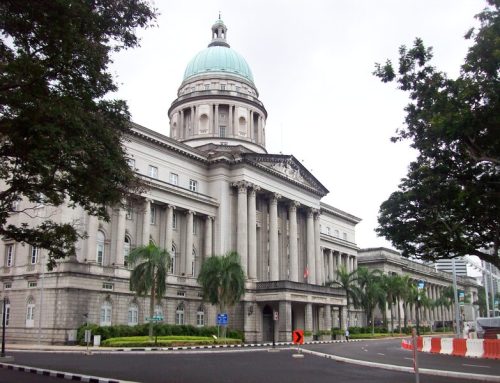
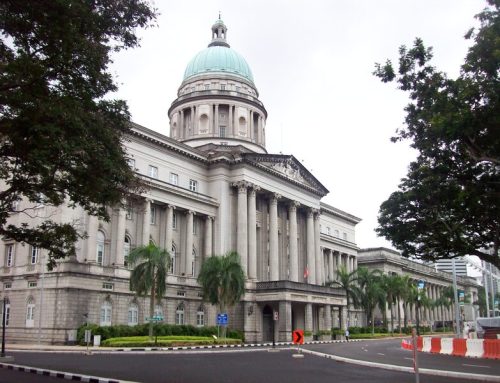
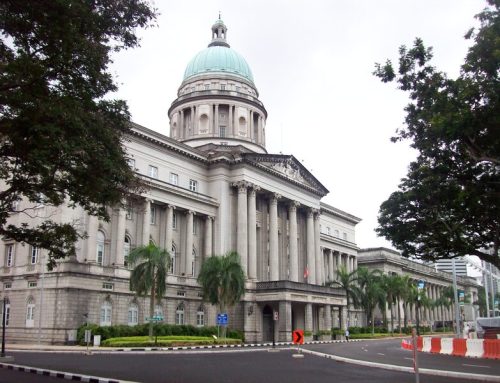
Company law applications of this kind are generally brought in the General Division of the High Court, usually as an originating application or by writ depending on the relief sought. Interim injunctions may be sought in the same proceedings. Procedures follow the Rules of Court 2021, and the court’s published practice directions set out the filing requirements. The Singapore judiciary website publishes forms, court fees and practice directions, and parties should check the current versions before filing.
Indicative timelines and costs
| Step | Typical timing | Indicative cost (SGD) |
|---|---|---|
| Review of constitution and facts | 1 to 2 weeks | 2,000 to 6,000 |
| Letter before action and negotiation | 2 to 4 weeks | 1,500 to 5,000 |
| Urgent interim injunction application | Days to 2 weeks | 10,000 to 30,000 |
| Substantive claim to trial or hearing | 9 to 24 months | 50,000 and above |
These figures are indicative ranges only, not quotes. Actual costs depend on the complexity of the dispute, the number of parties and whether the matter settles. Always obtain a fee estimate from your lawyer.
Practical tips for directors
- Read the constitution before the board approves unusual transactions, especially borrowing, guarantees, share issues and related party dealings.
- Keep the register of members and directors current, using our guide on rectifying the register of members if errors arise.
- Where a transaction needs a special resolution, hold the meeting properly or use a compliant written resolution.
- Record conflict disclosures and the board’s reasoning.
- If an irregular act was done, take advice on ratification promptly rather than hoping nobody notices.
Practical tips for shareholders
- Ask for copies of resolutions and the current constitution if something looks wrong.
- Act promptly. Delay can defeat an application for an injunction and may weaken an oppression claim.
- Keep your own records of communications and notices received.
- Consider whether a negotiated outcome, such as a buy-out, is preferable to a long contested case.
How to prepare before you instruct a law firm
Gather the constitution and its amendments, the latest ACRA business profile, board and shareholder minutes, relevant contracts and a timeline of events. A clear bundle saves legal time and cost. A corporate secretary can assist with the registers and filings, but cannot give legal advice or conduct the litigation. If you need legal advice on a breach of a company’s constitution, we can point you in the right direction. For the underlying statutes, consult Singapore Statutes Online and the ACRA website, and keep an eye on Singapore business news and regulatory updates for developments.
For owners reviewing the commercial side of a dispute, sound financial management helps in weighing the cost of litigation against the amount at stake. Raffles Corporate Services supports directors and shareholders with secretarial records, constitution reviews and corporate housekeeping, and works with associated legal professionals where court action is needed.
To speak with the team at Raffles Corporate Services, you can email [email protected] or call, SMS, or WhatsApp +65 8501 7133. We are happy to assist with any queries.
The Editorial Team, Raffles Corporate Services


Leave A Comment