
Receiving a Singapore PR rejection letter is gut-wrenching. You probably spent months gathering documents, paying taxes diligently, integrating into the local community — only to receive a one-paragraph notice from the Immigration & Checkpoints Authority (ICA) saying your application was unsuccessful, with no reasons given.
The good news: a rejection is not the end. Most successful PR applicants we work with were approved on a second or third attempt, after correcting the weaknesses in their first application. The bad news: a knee-jerk re-application without reflection is the surest way to be rejected again.
This guide walks you through what to do in the days, weeks and months after a Singapore PR rejection — with a clear path back to a stronger application.
Why ICA Doesn’t Tell You the Reason
The ICA’s rejection letter is famously short. It will say something like: “Your application has not been successful.” No reasons. No appeal grounds. No score. This is by design — the ICA exercises broad discretion under the Immigration Act 1959 and is not required to give particularised reasons for any individual decision.
That doesn’t mean the rejection is random. Through years of pattern-matching across hundreds of applications, we know the typical reasons:
- Insufficient income relative to age and family size
- Short tenure in Singapore at the time of application
- Profile from an over-represented nationality with limited differentiation
- No clear long-term commitment to Singapore (e.g., children not enrolled in local schools)
- Industry that is not on Singapore’s economic priority list
- Tax payment record below expectations for stated income
- Spouse’s profile that may have weighed down the household application
If you have a fair sense of which of these applies to you, you have a starting point.
The First 30 Days: Don’t Panic
The most common mistakes we see in the first 30 days after a rejection are:
- Submitting an immediate appeal letter saying “please reconsider” with no new information.
- Re-applying within weeks with virtually identical documentation.
- Looking for shortcuts (such as believing a connector or third party can “expedite” approval — they cannot).
None of these work. ICA can see your application history, including any previous rejections. A weak resubmission within months of a rejection generally results in a faster rejection.
Your Two Real Options
After a Singapore PR rejection, you genuinely have two paths:
Option 1: File an Appeal
An appeal letter is appropriate if you have new and material information that wasn’t part of your original application. Examples:
- You received a significant promotion or salary increase since the application was filed
- Your family circumstances have changed (e.g., child born in Singapore, marriage)
- You acquired a new professional qualification
- You believe there was a clear factual or documentation error in the original
An appeal letter should be filed within six months of the rejection date. Keep it concise — three to four paragraphs is typical — and focus on what has changed. Avoid emotional appeals; ICA officers process thousands of these.
Realistically, fewer than 10–15% of appeals succeed without genuinely new information. If your only argument is “I really want PR”, an appeal is not the right route.
Option 2: Wait and Submit a Stronger Re-Application
For most applicants, this is the right path. The accepted minimum waiting period is six months from the rejection date, but in practice, applicants who wait 12–18 months and use that time to materially strengthen their profile have far higher success rates.
What does “strengthening” actually mean? Specific, measurable steps:
- Promotion to a more senior role with increased fixed salary
- Continuous tax filings showing rising income
- Children enrolled in MOE primary or secondary school
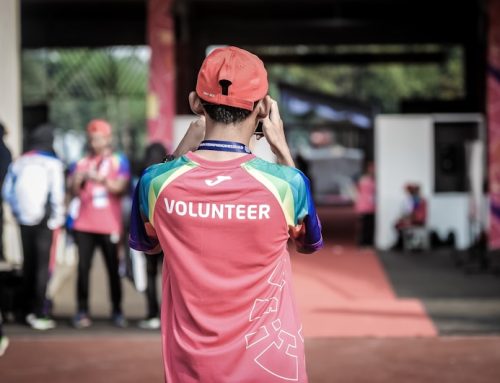
- Volunteering or community involvement (verifiable)
- Completion of an additional professional qualification
- Settling into a longer-term lease or property purchase
Diagnosing What Went Wrong
Without ICA telling you the reason, you have to make an educated diagnosis. Run through this checklist honestly:
Income and Tax Profile
For working professionals applying under the PTS scheme, ICA generally expects an income trajectory that places the applicant in the upper bands of their age cohort. If you are aged 35 and earning S$6,000 a month, that is at the floor of the qualifying band — your application will be lower priority than peers earning S$10,000+. Look at your last three years of Notice of Assessment from IRAS; if your income is flat or declining, that is a flag.
Length of Stay
While there is no formal minimum, applicants with less than two years of substantive work in Singapore are statistically more likely to be rejected. The system rewards demonstrated commitment.
Family and Settlement
Married applicants with school-age children enrolled in local schools tend to fare better than single applicants who appear to have no settlement intent. This is not a rule — many single applicants succeed — but it is a pattern.
Quality of Documentation
Sometimes the rejection is not about your profile — it’s about how the application was put together. Common errors: missing pages, inconsistent numbers between forms, employer letter that doesn’t match payslips, untranslated foreign documents, or a personal statement that reads as generic. A rejected application that was poorly assembled can sometimes be turned around with a properly prepared resubmission alone.
The Personal Statement That Makes the Difference
The personal statement (Part of the e-Service application) is one of the few places where the applicant can directly tell their story. Yet most are perfunctory — a paragraph about being a hard worker who loves Singapore.
A good personal statement covers, in measured tone:
- Why Singapore specifically (not “Asia” or “the region”)
- Tangible contribution to your sector or community
- Clear long-term plans involving Singapore (career, family, property)
- Any unique skills or qualifications that align with national priorities
For applicants in financial services, family offices, R&D and technology, the alignment with national priorities is often the easiest factor to articulate. See our Singapore PR Scheme for Individuals Working in Singapore for the broader framework.
Pathways You Might Not Have Considered
If your standard PTS application has been rejected twice, it may be worth considering alternative routes:
Global Investor Programme (GIP)
For high-net-worth applicants, the GIP administered by the EDB offers PR for investments of S$10 million in a Singapore business or S$50 million in a single family office. Strict eligibility, but a different evaluation framework than the PTS scheme. We discuss this in How to Get Singapore PR through the GIP.
Foreign Artistic Talent (ForArts)
For practising artists, performers and cultural professionals with international recognition. Administered by the National Arts Council.
Family Sponsorship
For applicants whose spouse or parent is a Singapore citizen or PR — a separate, often more direct pathway than PTS.
What Doesn’t Work
Three persistent myths cost applicants money and time:
- “Hire an immigration agency that knows people inside ICA.” No agency has special access. ICA officers process applications on the merits as presented. What a good agency does is assemble your application well — not influence the decision.
- “Donate to a Singapore charity to improve your chances.” Donations have to be genuine, voluntary and ongoing to count toward integration. A one-off cheque cut weeks before re-applying does not move the needle.
- “Switch to a higher-paying job at a Singapore startup.” If the job is genuine and sustainable, yes — your trajectory matters. If the role is a paper title with no real responsibilities, ICA is good at spotting it.
How Long Should You Wait Before Re-Applying?
Our typical recommendation:
- Six months minimum if you have a clear, material change to point to (promotion, marriage, child, new qualification)
- Twelve months if you need to build the profile (e.g., demonstrate sustained income, tax filings, integration)
- Eighteen months or more if your last application was your second or third rejection — at this point a structural change in your situation is needed before another submission makes sense
If you are an Employment Pass holder considering whether to keep working in Singapore while planning your re-application, see our guide on whether starting a company helps your PR chances.
Practical Next Steps
Within 30 days of receiving the rejection:
- Save the rejection letter and confirmation email — you’ll need the date for the appeal window
- Pull together your last three years of payslips, IR8A forms and Notices of Assessment
- Honestly identify two or three areas of your profile that could be strengthened
- Decide whether you have new material information justifying an appeal, or whether to wait
- If waiting, start logging concrete steps each month toward strengthening
Conclusion
A Singapore PR rejection is a setback, not a verdict. The ICA processes hundreds of thousands of applications and approval is competitive. What matters is not the first decision but the trajectory of your case over the next 12–24 months — and how clearly you can demonstrate that you are building a life in Singapore, not just visiting.
If you would like a confidential review of your previous application, an honest diagnosis of weaknesses, or assistance preparing a fresh re-application, the immigration team at Raffles Corporate Services would be glad to help.
You may also wish to explore Singapore’s business news and guides for broader context. Business owners looking for legal advice on corporate matters or guidance on sound financial management will find additional resources through the links above.
— The Editorial Team, Raffles Corporate Services


Leave A Comment